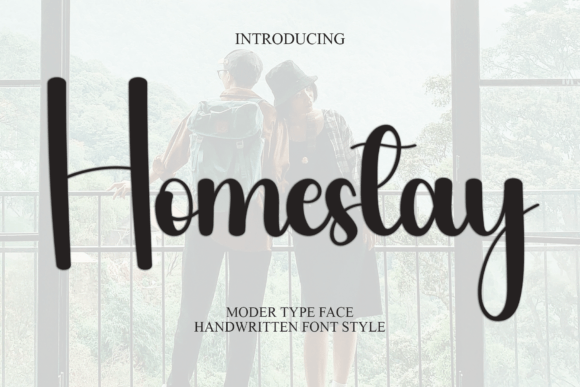
Homestay: The Handwritten Font That Adds Charm and Elegance to Every Design
Typography is more than just arranging letters—it’s a form of storytelling. With the rise of digital communication, people are craving authenticity and warmth in their visual content. This is where Homestay shines. A beautifully crafted handwritten font, Homestay feels equally charming and elegant, making it an ideal choice for a wide range of creative projects. From wedding invitations to business cards, this font adds a personal touch that resonates with modern audiences while staying timeless in its appeal.
The Rise of Handwritten Fonts in Design
In today’s fast-paced digital world, consumers are inundated with polished, impersonal content. As a result, there has been a growing appreciation for designs that reflect human emotion and creativity. Handwritten fonts like Homestay have become increasingly popular because they offer a sense of individuality and sincerity that sans-serif or serif typefaces often lack.
This shift is particularly evident in branding and marketing. Companies are leaning into more authentic aesthetics to connect with customers on a deeper level. Whether it's a boutique hotel promoting a cozy experience or a startup emphasizing a grassroots approach, using a font like Homestay helps convey that message visually.
Why People Choose Homestay
- Authenticity: It brings a human element to digital designs, helping brands appear more genuine.
- Versatility: Its balanced charm works across both formal and casual contexts.
- Readability: Despite being cursive, Homestay maintains clarity, making it suitable for short texts and headlines.
- Emotional Connection: The font evokes feelings of comfort and familiarity, which is especially powerful in greeting cards, thank you notes, and other personal communications.
Applications Across Industries
Homestay isn’t limited to one niche—it adapts well to many design needs. For example, in the event planning industry, couples are opting for custom wedding invitations that feature unique typography. A handwritten font like Homestay gives these invitations a romantic and bespoke feel, setting the tone for the entire celebration.
Similarly, educators and bloggers use Homestay to add a warm, inviting look to their materials. It can be used for motivational quotes, course titles, or even as a signature font in email newsletters. In each case, the font enhances the visual appeal while maintaining professionalism.
Real-World Examples
Consider a local bakery launching a new line of handmade cookies. By incorporating Homestay into their packaging labels and social media posts, they instantly create a sense of craftsmanship and care. The same principle applies to small businesses creating logos or entrepreneurs designing pitch decks—Homestay offers a way to stand out without sacrificing elegance.
Freelancers who specialize in graphic design or content creation often recommend Homestay for clients seeking a personal yet refined aesthetic. Its adaptability means it can be paired with minimalist layouts or richly illustrated backgrounds, depending on the project’s needs.
Homestay in the Digital Age
With the proliferation of online platforms and digital tools, the demand for high-quality, customizable fonts has never been higher. Homestay meets this need by offering a clean, professional handwritten style that works seamlessly in both print and digital formats.
Designers appreciate how easy it is to integrate Homestay into their workflow. Whether they're using Adobe Illustrator, Canva, or Figma, the font performs consistently, ensuring that the final output looks polished and intentional. Moreover, the availability of different weights and styles allows for greater flexibility when tailoring designs to specific audiences or purposes.
How to Use Homestay Effectively
- Pair with Contrasting Fonts: Use Homestay alongside a modern sans-serif font to balance its organic feel with structured elements.
- Limit Usage to Key Elements: Apply it to headlines, taglines, or short phrases rather than large blocks of text to maintain readability.
- Use Sparingly for Branding: Incorporate it as an accent font in logos or signatures to highlight personality without overwhelming the brand identity.
- Experiment with Color and Texture: Add subtle gradients, watercolor effects, or vintage textures to enhance the charm of Homestay-based designs.
Creating Emotional Impact Through Typography
Fonts play a crucial role in shaping how people perceive a brand or message. While some fonts scream authority and others whisper subtlety, Homestay speaks in a voice that is both inviting and sophisticated. It’s the kind of font that makes you pause and read a bit longer, whether it’s on a greeting card or a website header.
Marketers understand this well. When launching campaigns focused on community, family, or personal connection, they often turn to handwritten fonts like Homestay to evoke those feelings. It doesn’t just look good—it tells a story.
Case Study: A Wedding Invitation Redesigned
A recent project involved redesigning a traditional wedding invitation suite. The client wanted something modern but still warm and heartfelt. After experimenting with several fonts, we landed on Homestay for the main title and key messages. The result was a stunning set of invitations that felt both contemporary and deeply personal. Guests remarked on the “handmade” quality, even though the design was fully digital. This feedback highlights how effective Homestay is at bridging the gap between tradition and modernity.
Homestay and User Experience
User expectations are evolving. They want interfaces that feel intuitive and emotionally engaging. While not every part of a user interface should be in a handwritten font, strategic use of Homestay can make all the difference. Think of a wellness app that uses it for its welcome screen or a lifestyle blog that features it in pull quotes—these touches create memorable interactions and foster trust.
Entrepreneurs in the creative space also benefit from Homestay. When building a portfolio or showcasing their work, a designer might use it for headings to emphasize the human side of their craft. This subtle detail can help them connect better with potential clients and collaborators.
Best Practices for Web and Print
- Ensure sufficient contrast when using Homestay on websites or mobile apps.
- Avoid overusing ligatures or decorative strokes if legibility is a priority.
- Test how the font renders on different devices and screens to guarantee consistency.
- When printing, choose high-resolution formats to preserve the fine details of the handwriting.
Beyond Aesthetics: Why Homestay Matters Now
Handwritten fonts have long been associated with nostalgia and tradition, but Homestay shows that they can also fit into forward-thinking design strategies. As more people seek authenticity in everything from food to fashion, the visual language must evolve accordingly. Homestay does this by combining the warmth of handwriting with the precision of digital typography.
It also aligns with current trends in remote work and hybrid lifestyles. Many professionals now operate from home offices, and their branding reflects this shift toward a more relaxed yet professional environment. Homestay can subtly reinforce that vibe, making it a valuable asset in modern design arsenals.
What Makes Homestay Unique?
While there are many handwritten fonts available, Homestay distinguishes itself through its elegant curves and consistent stroke weight. These characteristics allow it to maintain readability without losing its artistic flair. Unlike overly stylized scripts that can be hard to decipher, Homestay strikes the perfect balance between beauty and function.
Additionally, its neutral tone and lack of extreme embellishments make it suitable for a broader range of applications. Whether you’re designing a luxury product label or a simple thank-you note, Homestay adapts gracefully to the context.
Getting Started with Homestay
If you're considering adding Homestay to your design toolkit, here are some practical steps to begin:
- Download the font from a trusted source such as Adobe Fonts or Google Fonts.
- Preview it against your existing color schemes and layout structures before committing.
- Use it in combination with complementary fonts to avoid monotony in your design.
- Apply it in small doses initially to test how it affects the overall look and feel of your project.
Remember, the goal is to enhance your message—not obscure it. Use Homestay thoughtfully, and let its charm elevate your visuals without overpowering them.
Final Thoughts on Using Homestay
In a landscape dominated by sleek, machine-made fonts, Homestay offers a refreshing alternative. Its ability to blend charm and elegance makes it a standout option for designers looking to infuse warmth into their work. Whether you're crafting a logo, designing a greeting card, or developing a brand identity, Homestay provides the perfect touch of humanity.
As the lines between digital and physical experiences continue to blur, the need for fonts that bridge this divide becomes more apparent. Homestay doesn’t just look good—it helps build emotional connections, supports brand storytelling, and adds a layer of authenticity that is difficult to replicate with standard typefaces.